Sri Lanka had the innovators. What it needed was a brand built to match.
Brand before broadcast. Identity before execution.Sri Lanka's manufacturing and export sector had the innovators. What it needed was a platform with the authority to put them in front of the world. The Scale-Up Shop was that platform and it needed a brand to match its ambition.
We built the visual identity from the ground up. A system designed to speak to local innovators, exporters, and manufacturers without talking down to them. Strategic, credible, and built for scale.
Social media content extended the programme's reach beyond the room, turning event moments into ongoing narrative. Event design and digital content brought consistency across every touchpoint, from demo day to digital.
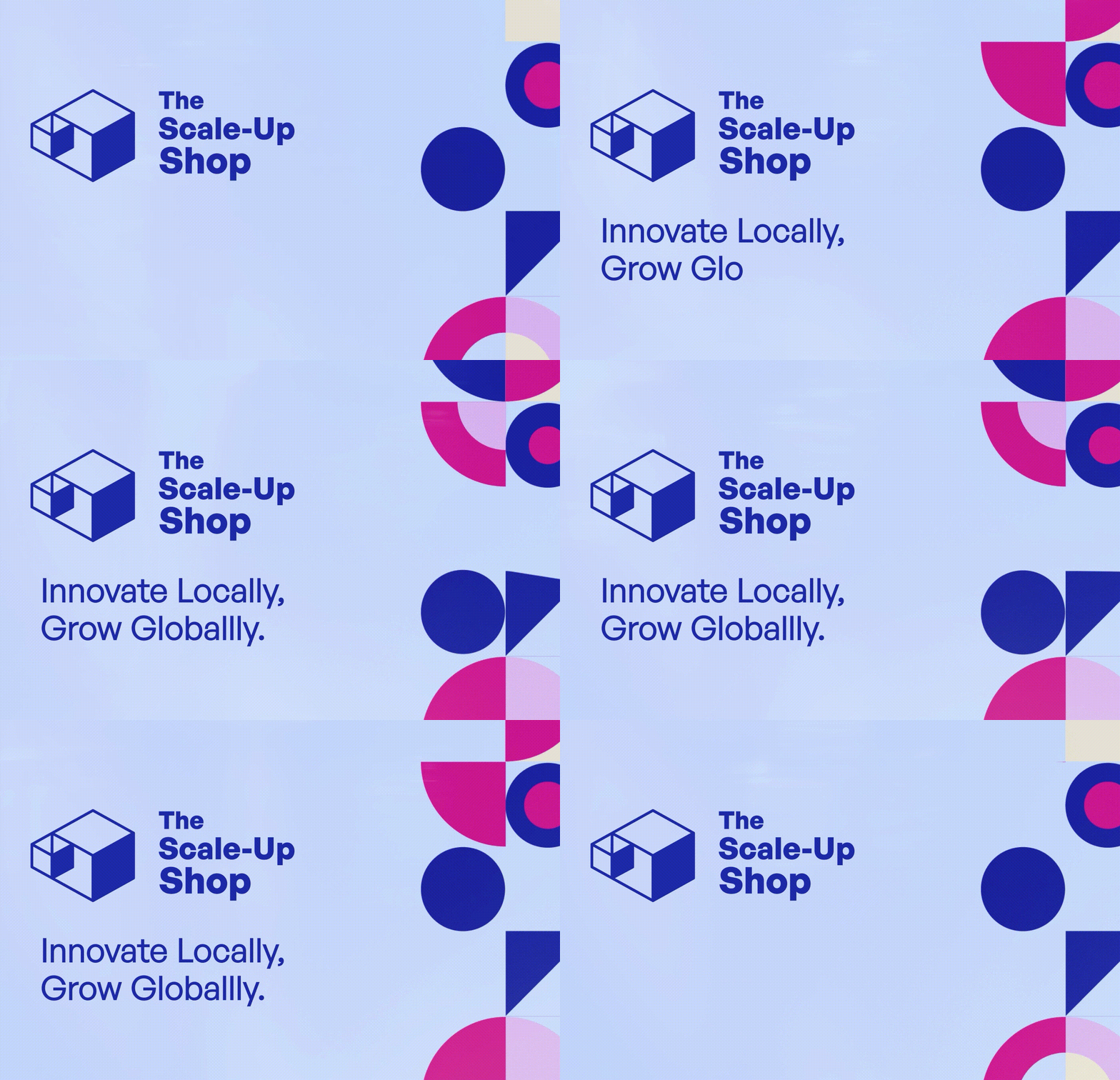

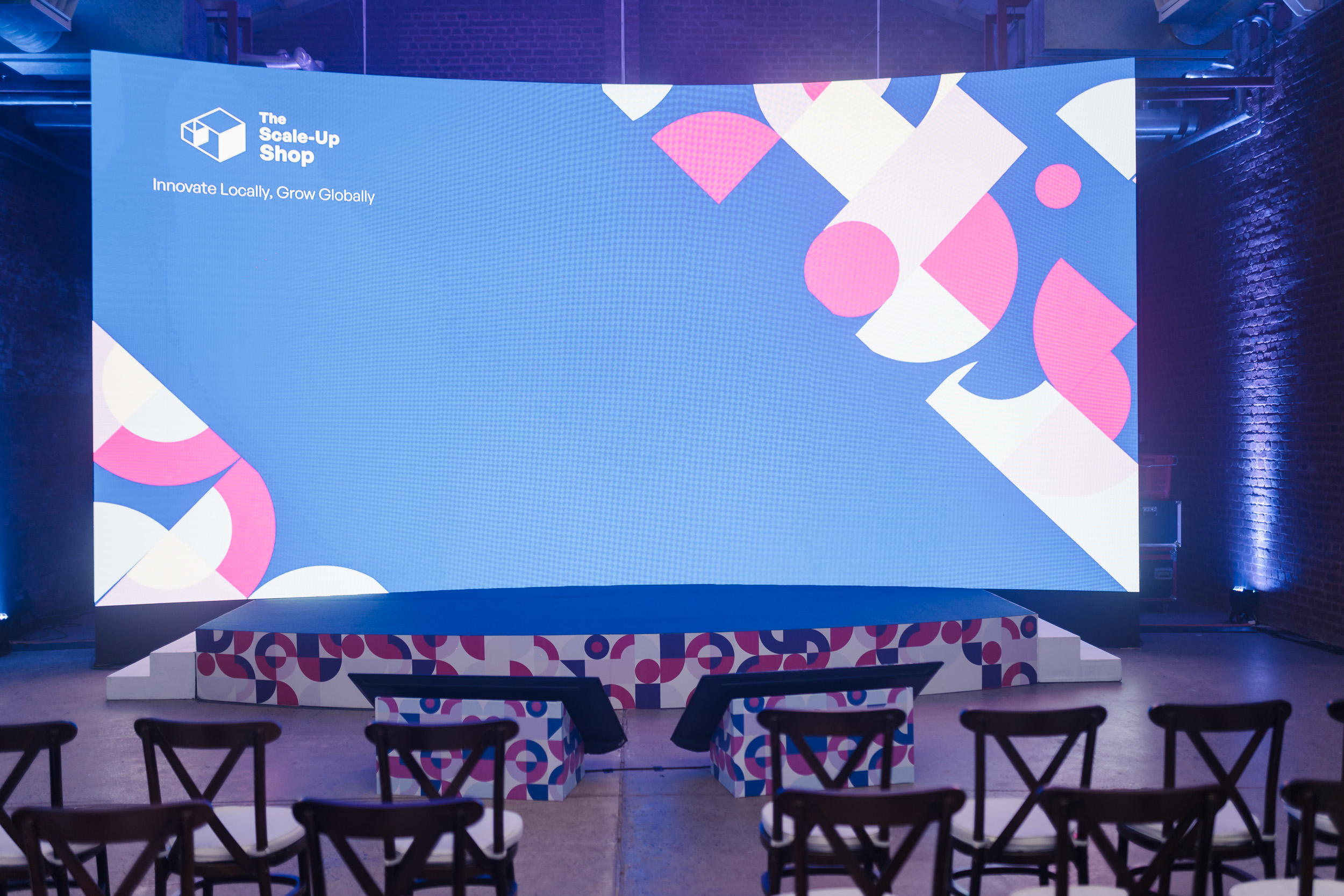
The brand system drew from a bold geometric language — primary blue anchored by magenta and lavender accents, built to communicate energy, credibility, and local pride simultaneously. The modular pattern system meant every touchpoint, from stage backdrops to social posts to booth design, felt cohesive without feeling repetitive.
Every asset was designed to work in isolation and as part of a system — a requirement for a programme spanning social media, live events, print collateral, and digital content across a compressed delivery timeline.
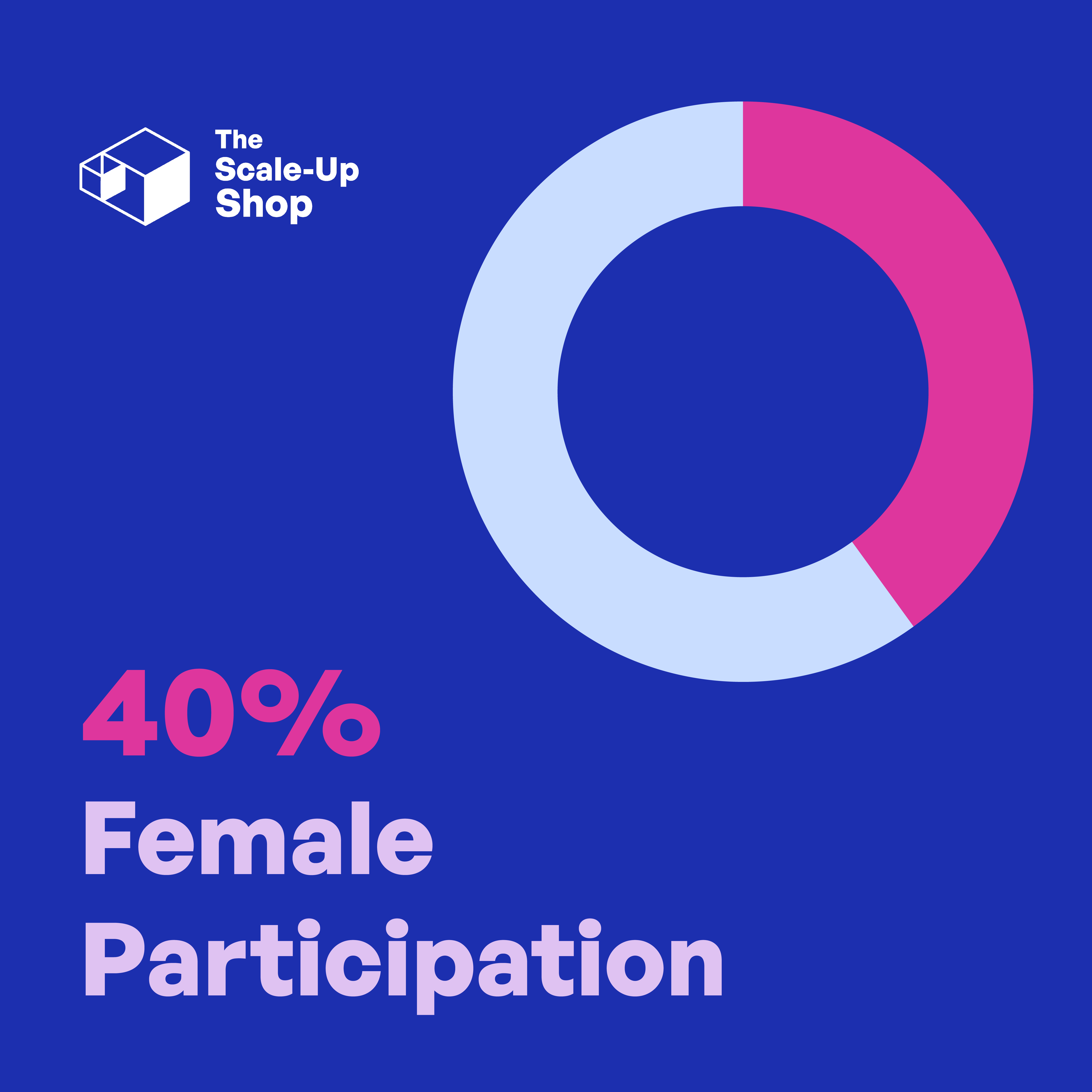
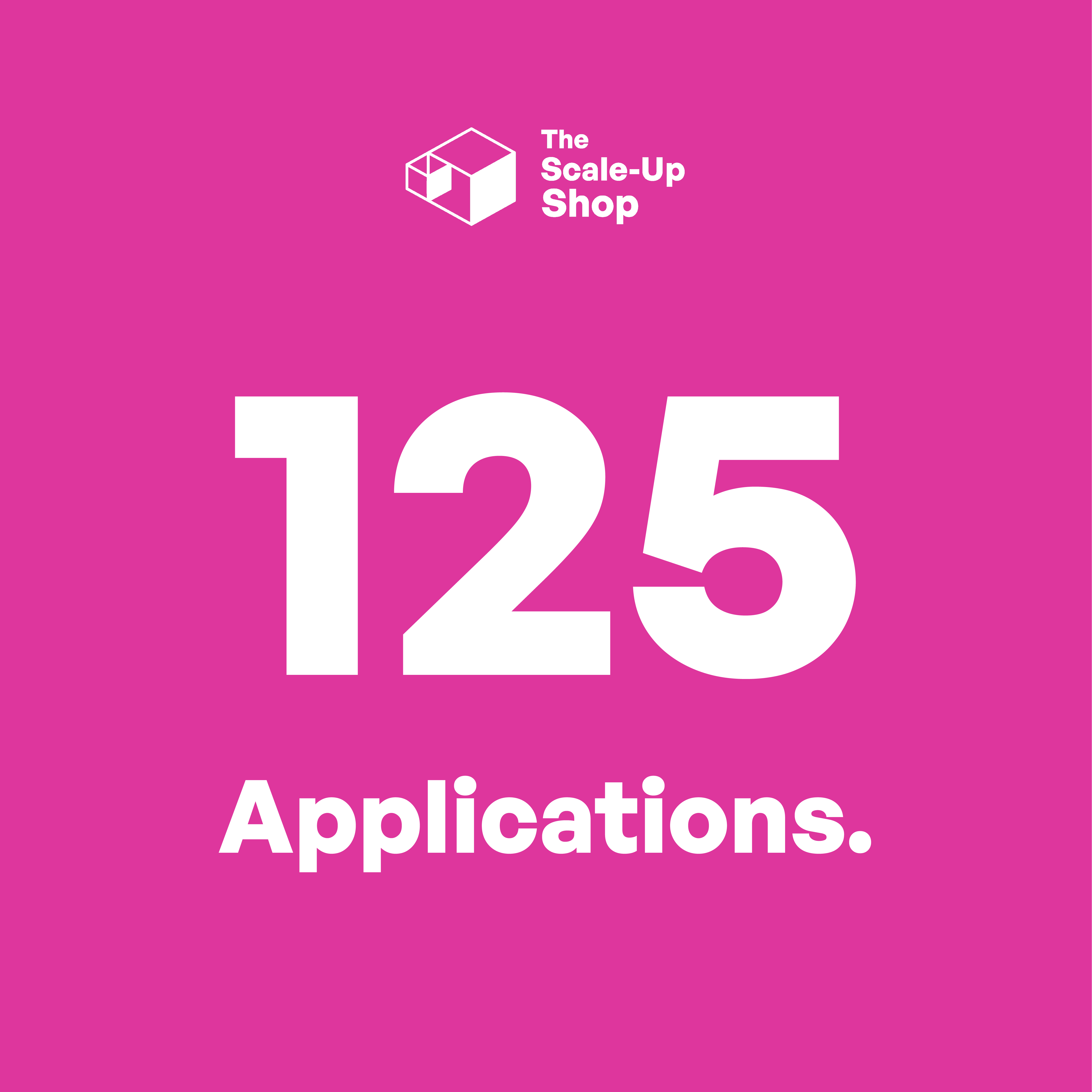
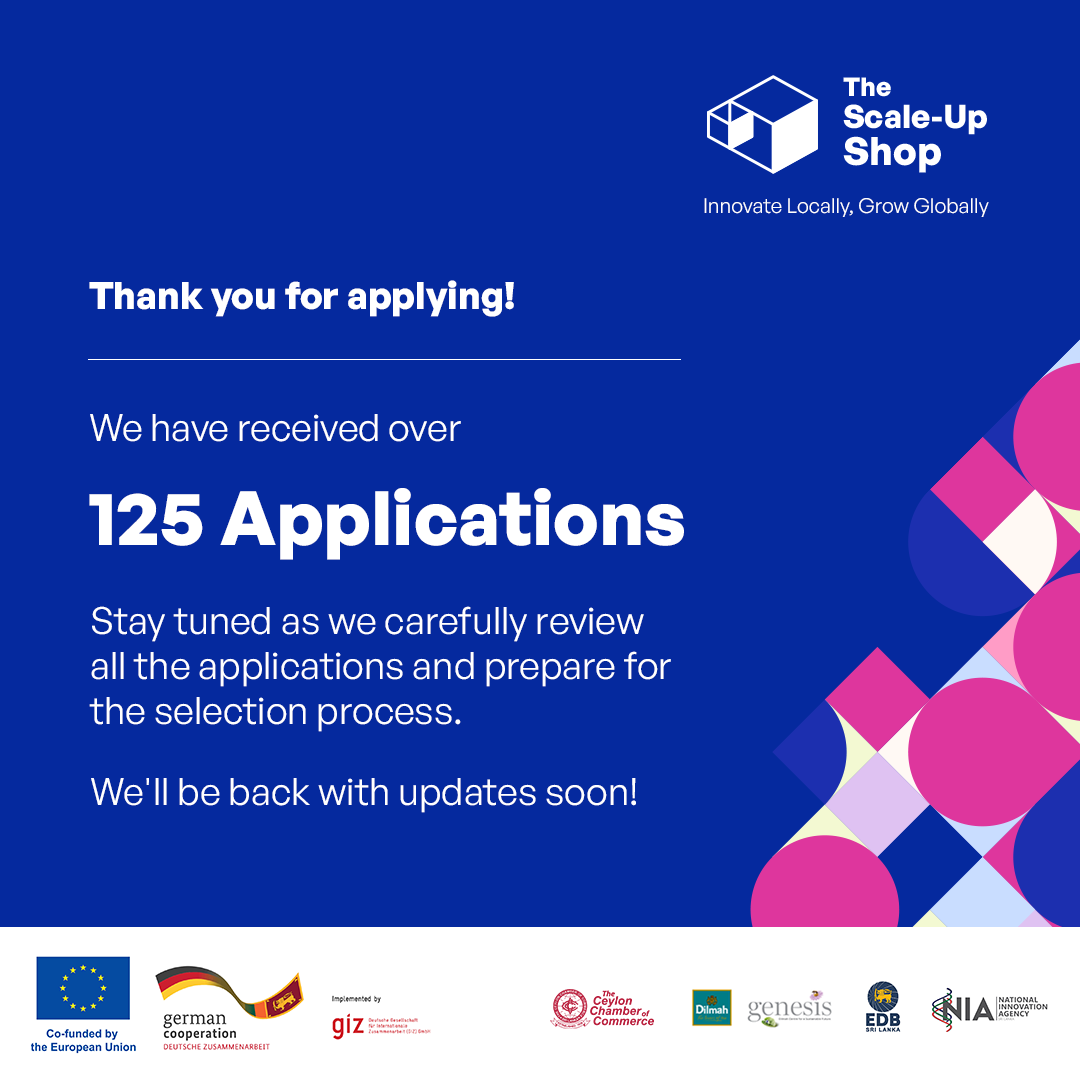
The social content programme ran the full arc of the accelerator — from applications open through to demo day. Each post was designed to carry the brand system while communicating a specific milestone clearly. The result was a feed that felt like a brand, not a bulletin board.


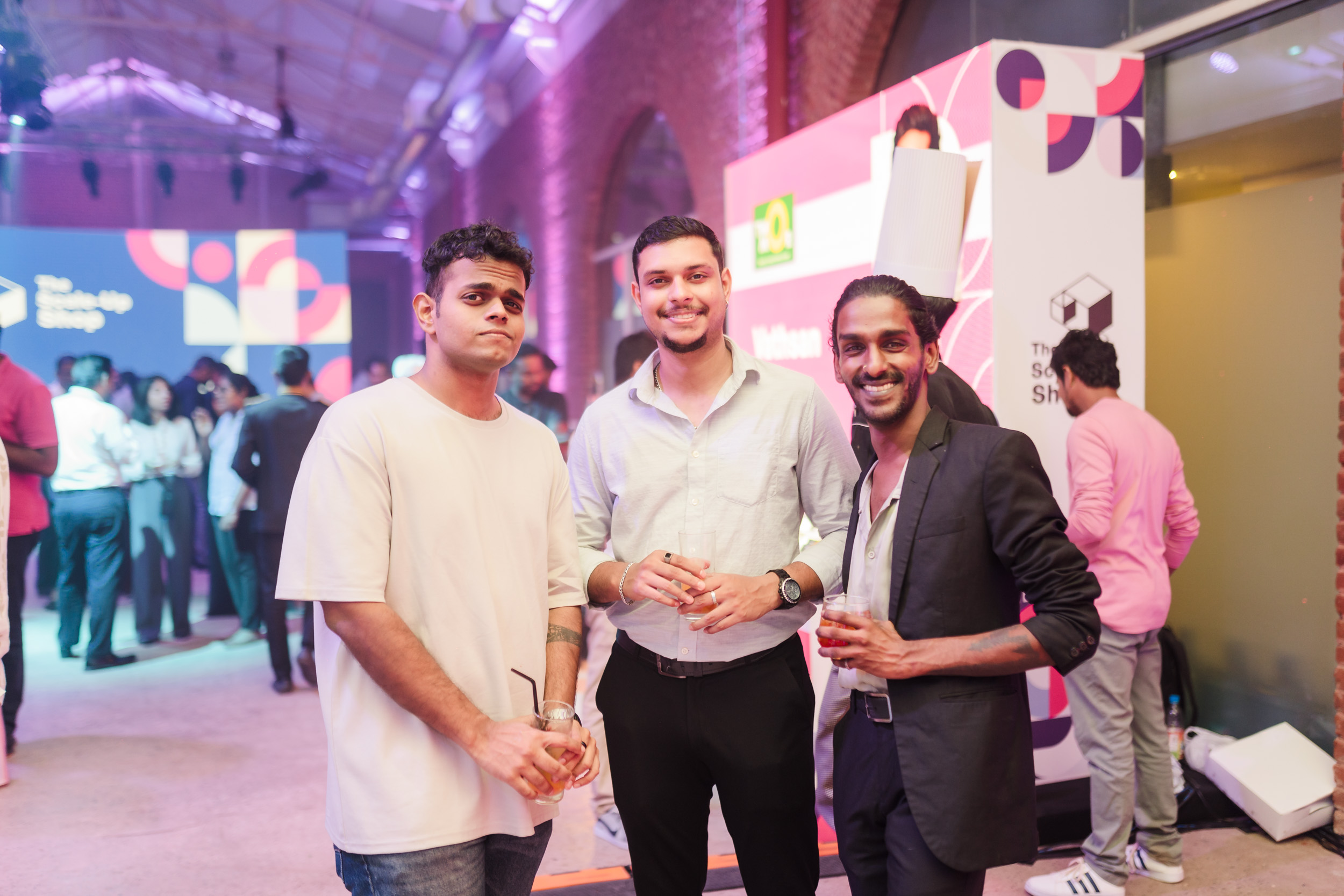
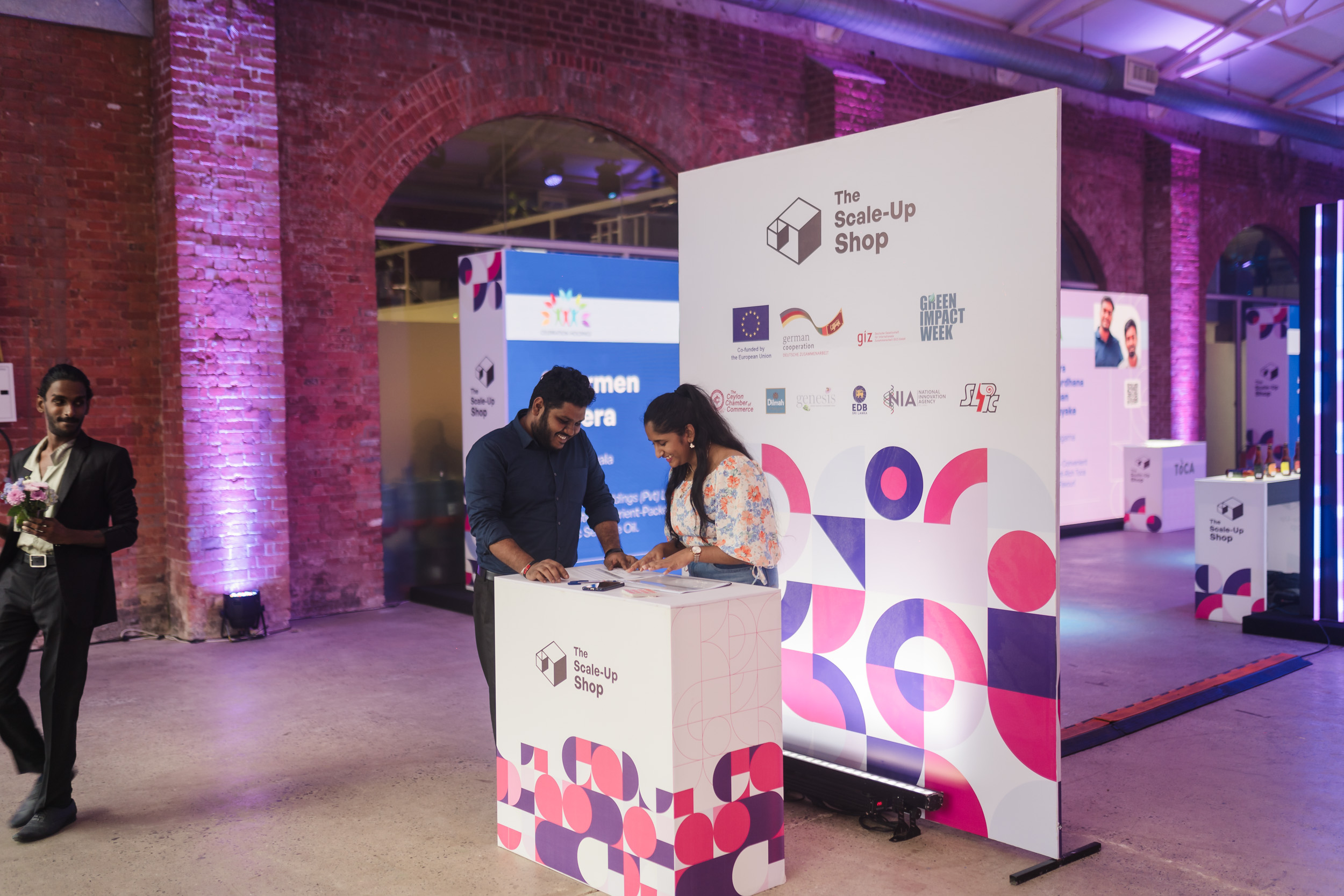
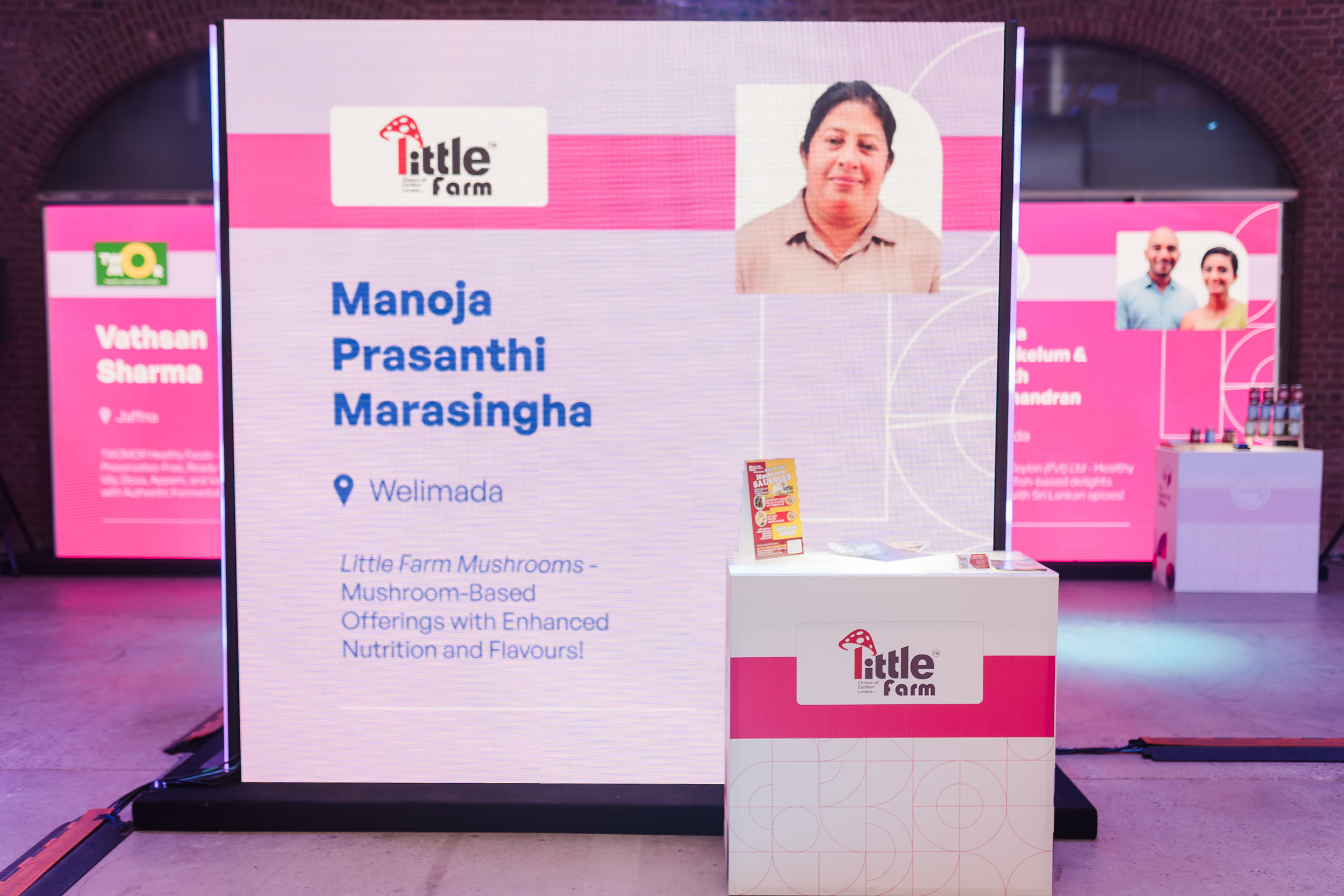
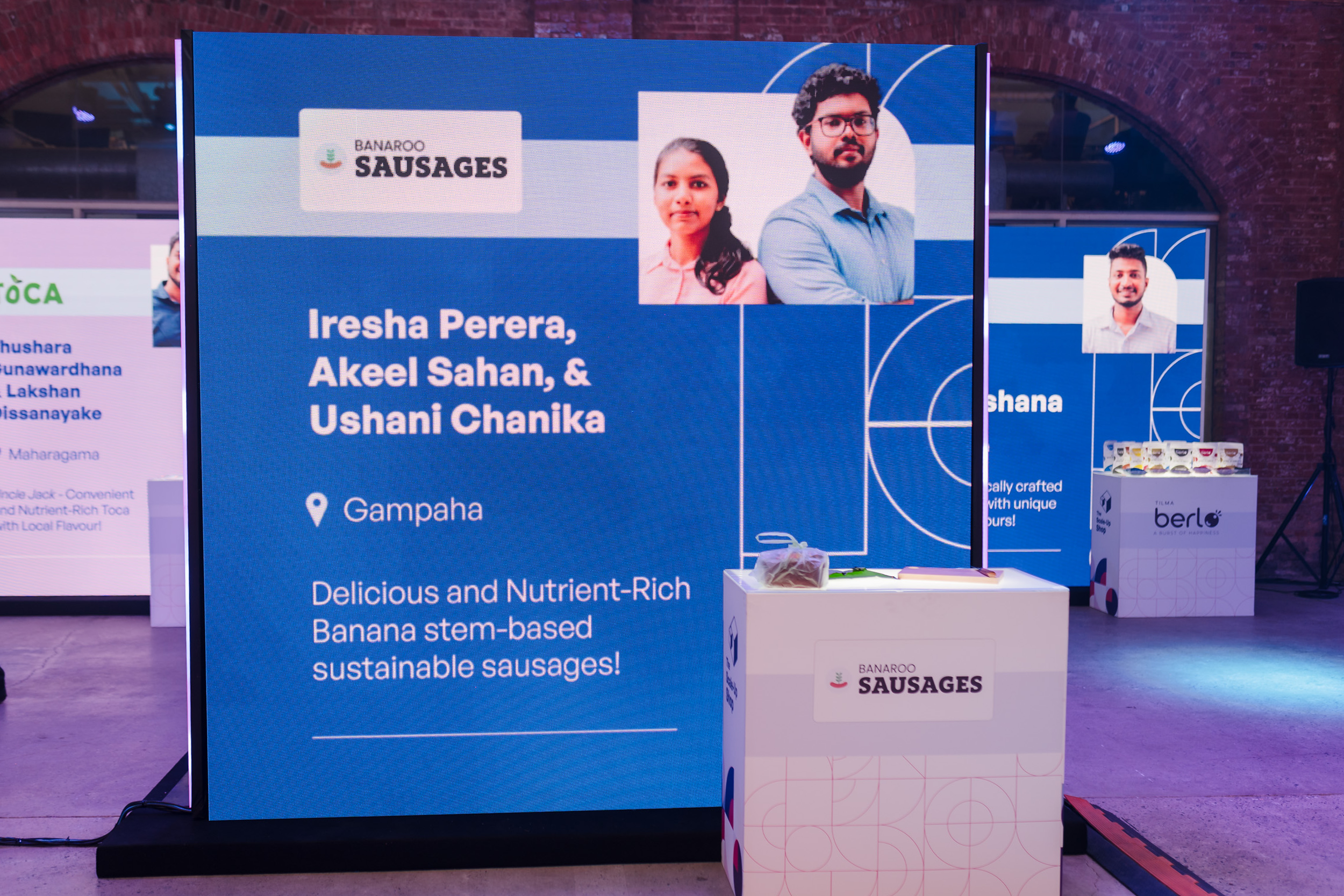
Demo Day was the culmination of the programme and the biggest test of the brand system. Stage design, booth graphics, print collateral, digital displays, and wayfinding all needed to carry the identity cohesively under event conditions. The visual system held across every format.
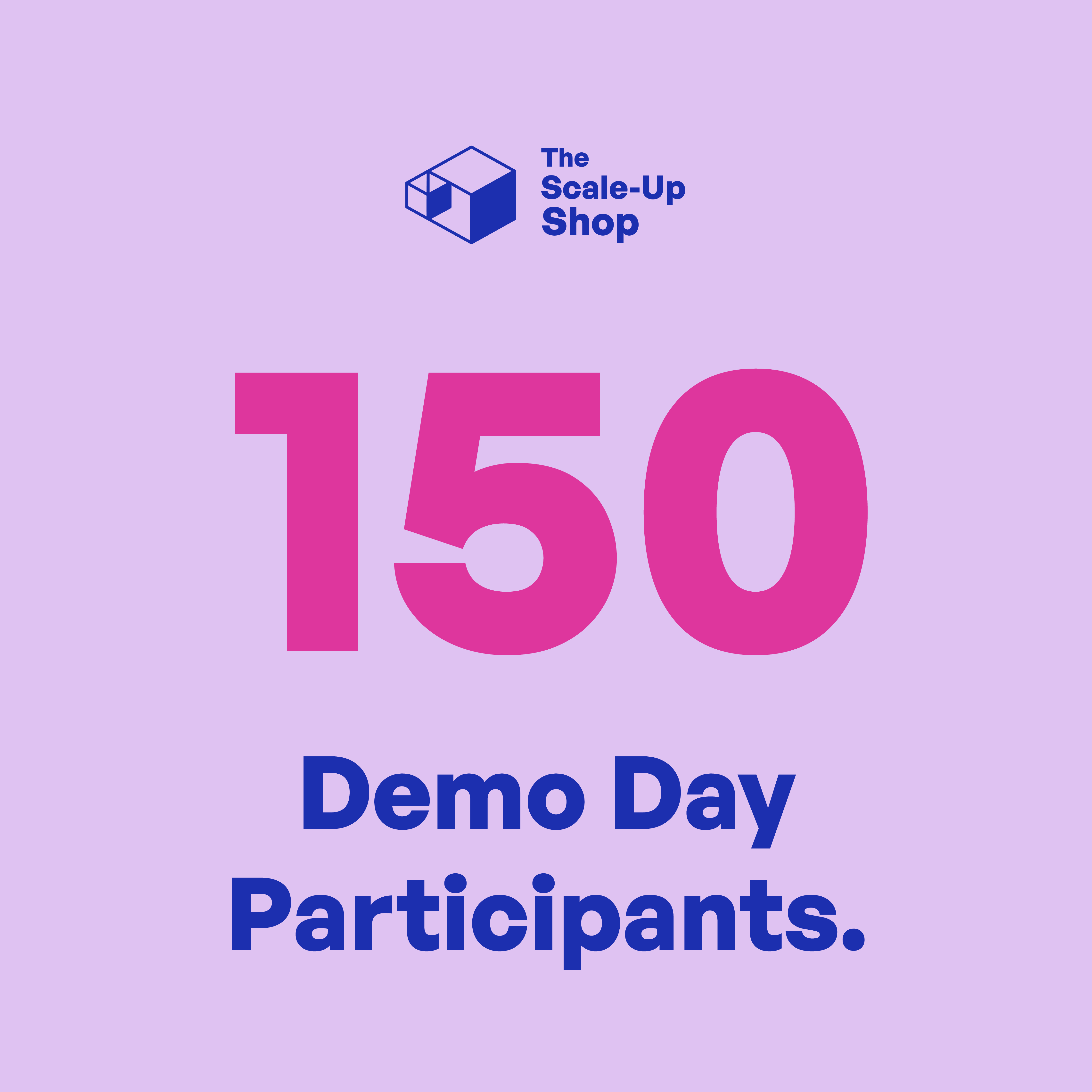
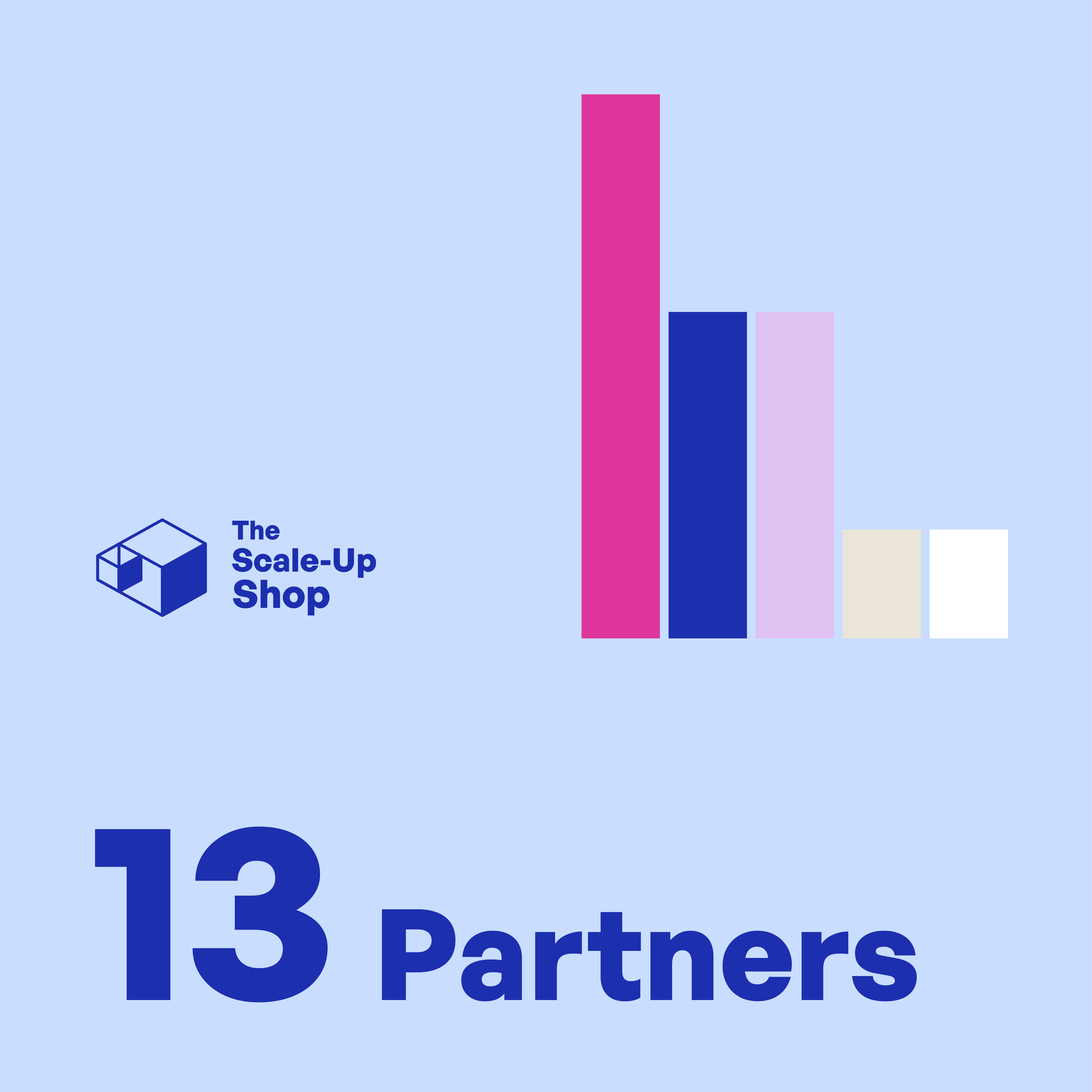
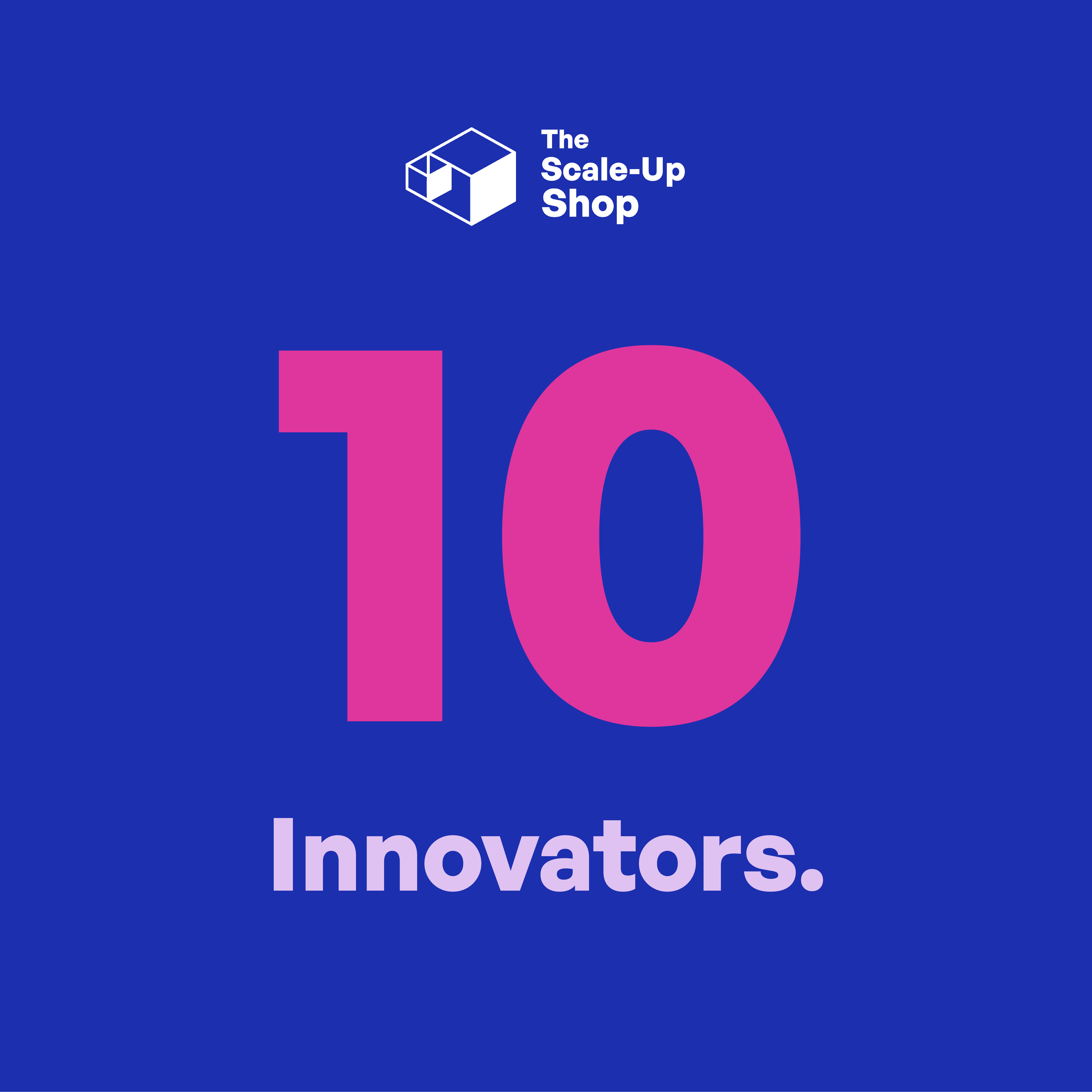
150 participants. 10 innovators pitching live. 13 institutional partners in the room. The brand had to command that space without competing with the people it was there to amplify.
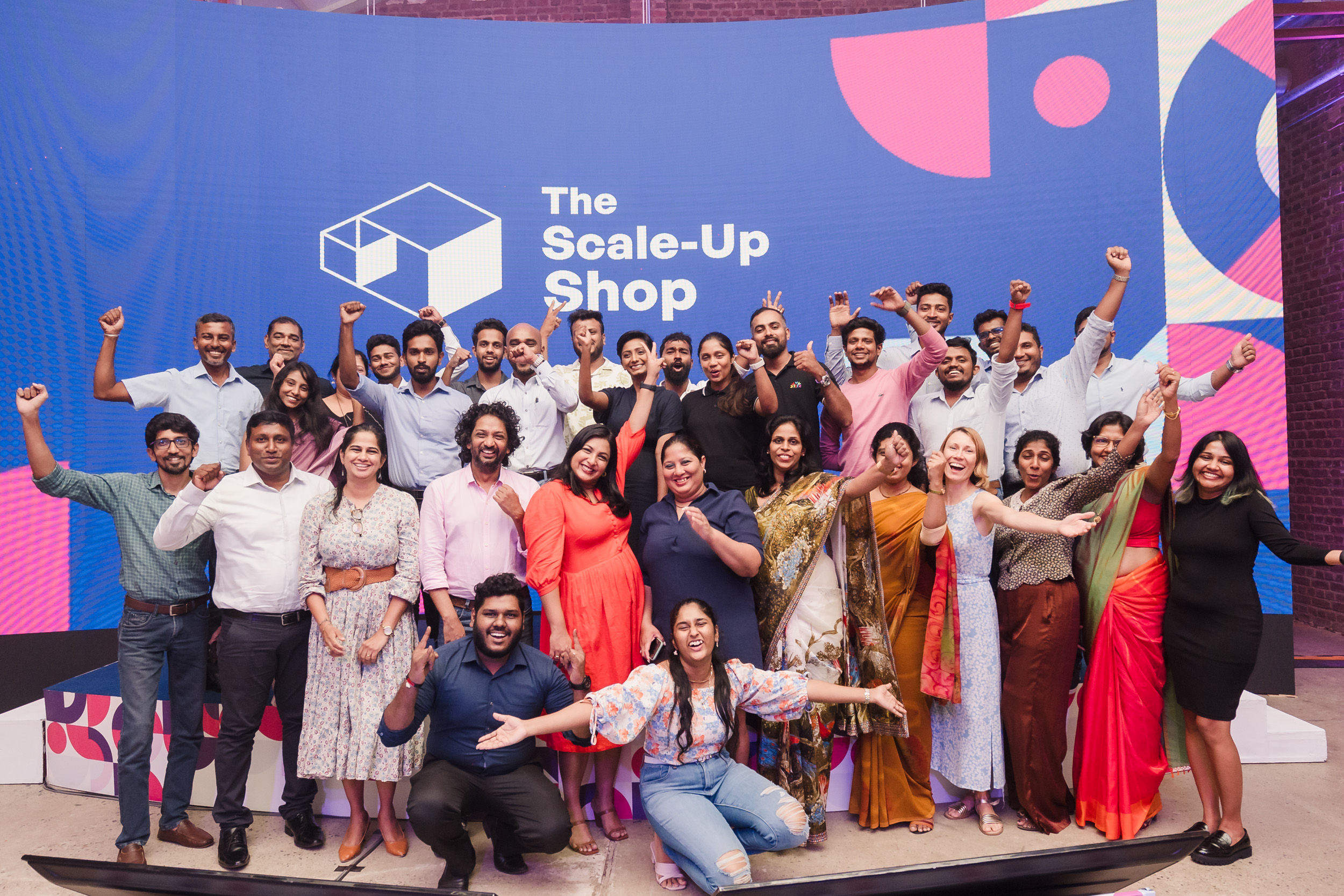
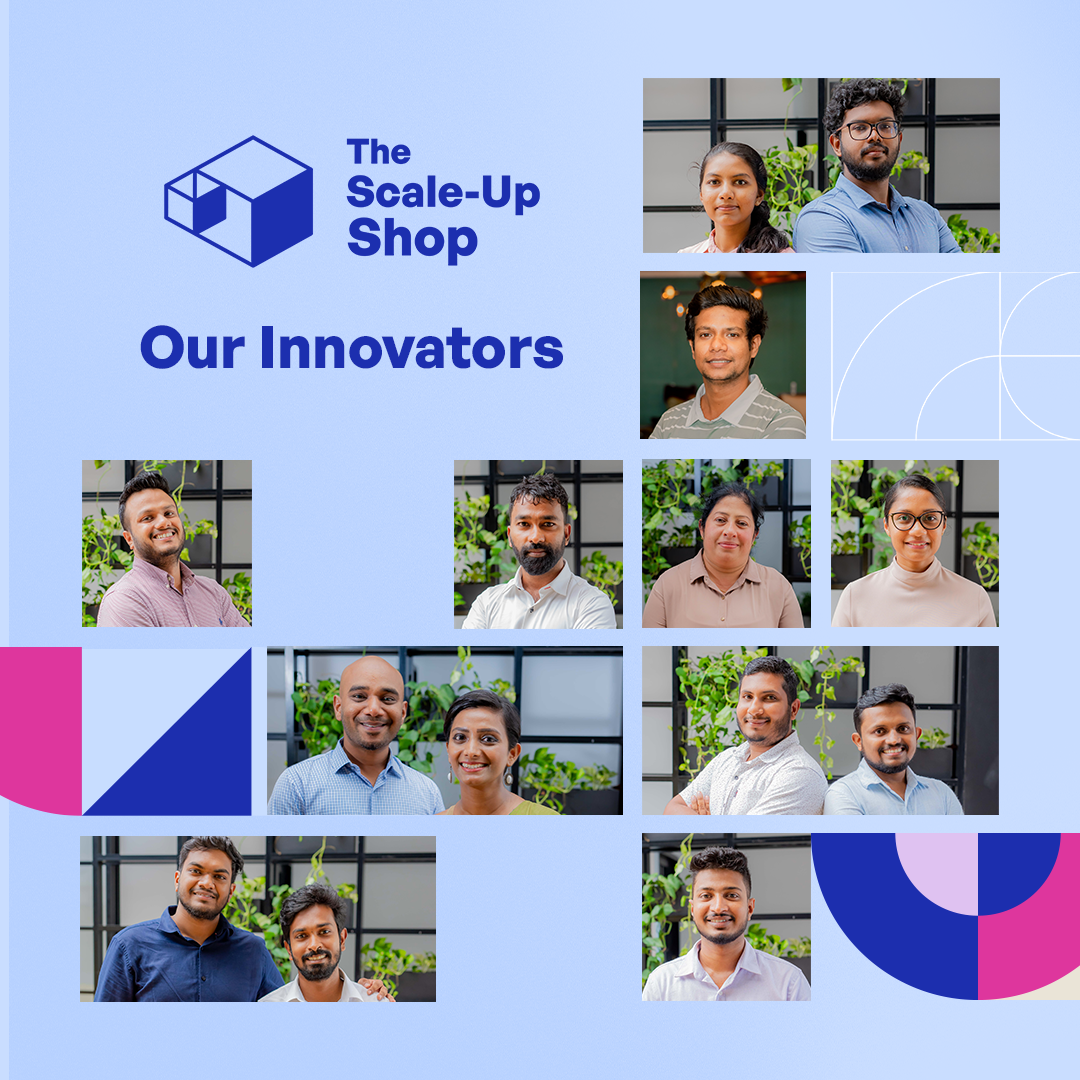
The programme attracted significant interest from Sri Lanka's innovation community, validated by the volume of applicants and the quality of cohort that made it through to Demo Day.
The Scale-Up Shop was co-financed by the European Union and the German Federal Ministry for Economic Cooperation and Development (BMZ), implemented by GIZ in collaboration with The Ceylon Chamber of Commerce, Dilmah Tea, Sri Lanka Export Development Board, National Innovation Agency Sri Lanka, and Sri Lanka Inventors Commission.
Partners included TRACE Sri Lanka, Sri Lanka Agripreneurs' Forum, DreamSpace Academy, IEEE Innovation Nation Sri Lanka, John Keells Research, and ICTA.